
The Programmer's Job Is Being Redefined (As I Write This)
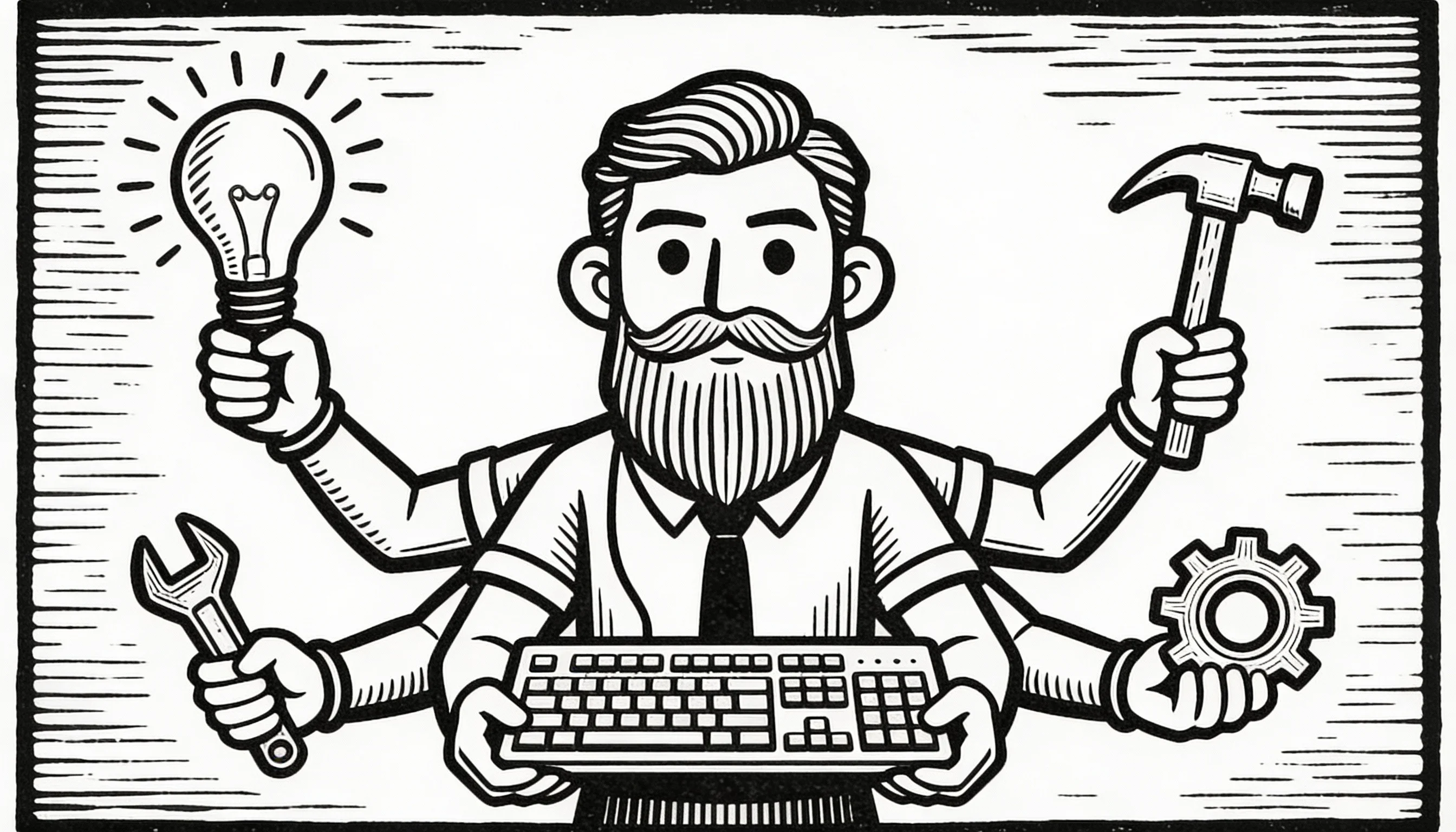
This isn’t a prediction. This is happening right now, as I write this sentence.
I’m a programmer. Twenty years in. And I’m watching my own job change in real time.
Engineers everywhere—myself included—are realizing we can do things today that would have taken us weeks last year. Claude Code, Cursor, Gemini—these tools aren’t coming. They’re here. And they’re changing what “being a programmer” actually means.
The trend isn’t slowing down. It’s accelerating.
But here’s what I know about us: programmers are beasts at adapting. We’ve survived every technology shift thrown at us—mainframes to PCs, desktop to web, monoliths to microservices. We’ll survive this one too. Because at our core, we don’t just write code. We solve problems.
And now? We’re about to solve a lot more of them.
The Job Was Always More Than Code
“Programmer” has always been a weird job title. It sounds like the job is writing programs, but the best programmers I’ve worked with spend most of their time not writing code. They’re asking questions, understanding problems, debating trade-offs, and occasionally—when they’ve figured out what actually needs to be built—they write some code.
The code was never the hard part. Understanding what to build was.
AI just made that distinction crystal clear.
What Gets Amplified
The programmers who’ll thrive aren’t necessarily the ones who write the most elegant algorithms. They’re the ones who can:
- Connect dots across disciplines. Understanding the business problem, the technical constraints, the user’s actual workflow, and how they all fit together.
- Make decisions under uncertainty. AI can generate ten solutions. Knowing which one to ship requires judgment that comes from experience, not training data.
- Communicate with humans. Explaining technical trade-offs to non-technical stakeholders. Translating customer pain into engineering requirements.
In other words: the job evolves from “person who writes code” to “person who solves problems using code, AI, and whatever else works.”
That’s not a downgrade. That’s a superpower.
The Entrepreneurship Explosion
Here’s what excites me most: the barrier to starting something just dropped through the floor.
I’ve dreamed about building my own products for years. But between the day job and the sheer amount of code required to get anything off the ground, “someday” kept getting pushed back.
Not anymore.
Building something used to mean months of coding, a team, maybe funding—before you could even test whether anyone wanted it. Now? You can prototype in a weekend. Solo. AI handles the repetitive parts—the boilerplate, the CRUD operations, the “I’ve written this same authentication flow fifty times” code.
This changes everything. I’m seeing it in my own work. I’m shipping things faster than ever.
If you ever thought “I could never start my own thing”—you might want to reconsider. The entry point has never been lower. You don’t need a co-founder. You don’t need months of runway. You don’t need a team. You need an idea and the willingness to build it.
I think we’re about to see an explosion of small software products built by programmers who finally realized: they can do this. The barrier isn’t “can I code this?” anymore. It’s “do I understand a problem worth solving?”
The New Differentiator
When building gets faster and cheaper for everyone, what sets you apart?
It’s not the technology. It’s not the implementation. It’s definitely not your clever architecture.
It’s whether you can find people who need what you built. Whether you can explain why it matters. Whether you can close the deal.
The final mile—getting from “working product” to “product people pay for”—becomes the whole game.
What To Focus On
If you’re a programmer navigating this shift like I am:
Get closer to customers. Understand what they actually need, not just what the ticket says. Join sales calls. Do support rotations. I’ve learned more from customer conversations than from any technical deep-dive.
Learn to communicate. Writing, presenting, explaining trade-offs to non-technical people. These skills compound. I’m working on this constantly.
Build something. Not because you need another side project, but because building for real users teaches you things no amount of coding does.
Embrace the tools. The engineers who resist AI assistance will fall behind. The ones who master it will multiply their impact. I use these tools every day now. This post was written with AI assistance. But the ideas are mine.
We’ve always been problem solvers who happen to use code. Now we’re problem solvers with better tools.
That’s not scary. That’s exciting.
So here’s my challenge to you: stop waiting. Put on the entrepreneur hat. Find a problem you care about. Build something.
The tools are ready. The barrier is gone. Let’s go.
I’ve spent 20 years writing code. Now I’m building things faster than ever and helping others do the same. If you’re navigating this shift too, let’s connect.